Helen Hansford is an art therapist, working as an art therapist at Westbury Park, a psychiatric hospital. The year is 1964 and art therapy is still something of a new idea. Helen enjoys her work and is challenged by it but psychotherapy is on the cusp of some big changes and it seems inevitable that things at Westbury Park will change sooner or later.
Helen’s personal life is more complex as she is three years into a relationship with a married man, a doctor at Westbury Park. We know from the narration early on in the book that this relationship is almost at its end. Gil is dashing and intelligent; he treat Helen fairly and seems to respect her as a colleague. He promises to leave his wife once their children are grown.
Into this somewhat fraught work dynamic, comes a brand new psychiatric case. William Tapping is in his mid-thirties and has not left his home in years. He lives with his elderly aunt and, when he is discovered, has hair and bear down to his ankles and refuses to speak. He has been shut away from the rest of the world for years. Helen hopes to reach him through art and becomes increasingly involved in trying to put together the pieces of William’s past.
Helen is a likeable character -smart even while she is naive. There’s a continuing theme through the book of what makes a person good. Helen has a “good person” job – she helps people who need help. But she’s doing a bad thing – sleeping with a married man. She is complex and real and you can’t help but root for her. In a weaker writer’s hands, Gil could be a stereotypical bad guy but Chambers handles their relationship deftly. It isn’t hard to see what Helen appreciates in Gil and why it’s so hard for her to walk away.
Overlying this personal drama is the story of William. There are interspersed chapters of William’s life before his entry to Westbury Park. These move backward through time with William getting younger so that slowly learn how he became the man he is and why he has lived in seclusion for so long. Because of this backward movement, it felt like we were moving toward a reveal, rather than that reveal being withheld from the reader. And when that reveal occurred, it actually wasn’t what I had expected to be.
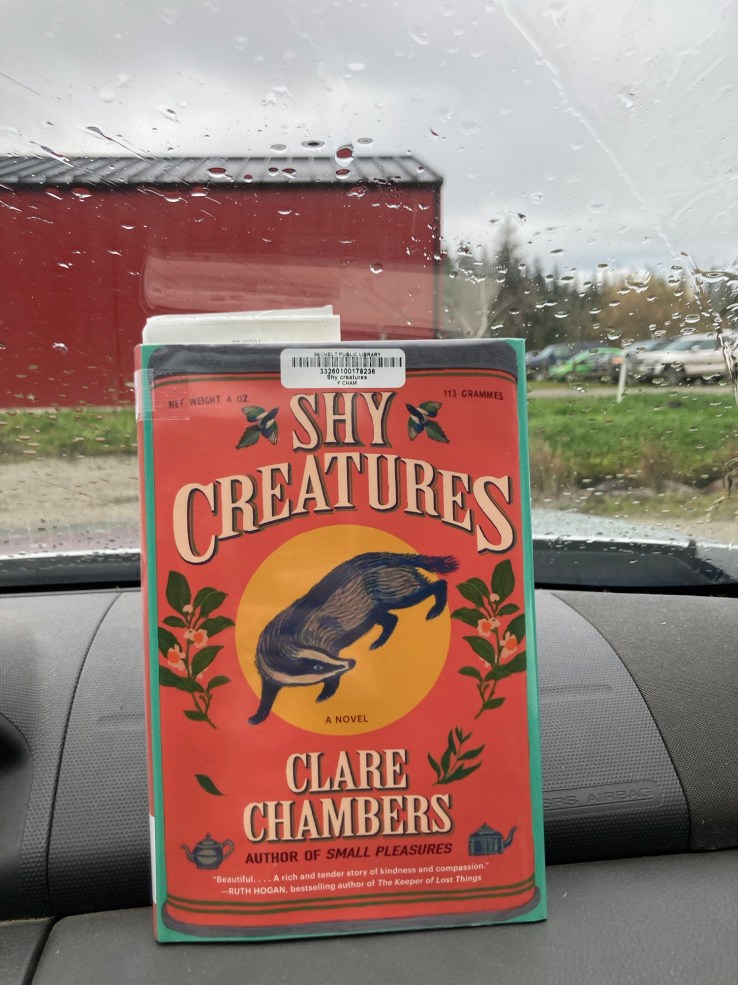
I loved the ways that Chambers brought the natural world to bear subtly in the lives of all the characters. There is a theme of badgers (as seen on the cover) throughout, particularly in reference to William, and the ways that each of the characters interact with the natural world subtly reveals something about their personalities.
This is the first book I’ve read from Chambers but I’m now eager to go back and get my hands on some of her older work.

 Karissa Reads Books
Excellent to hear this worked well for you. When I first read her, it was her novel Small Pleasures, which was explosively popular here. That might be the place to go next (although she’d published several novels before that, and they’re all much more readily available now, after Small Pleasures’s success).
I’m going to look for that one!
This sounds like a really interesting book, I think I’d enjoy it. There’s something really cute about the badger theme too, I’m not sure why but that really piques my interest!
I think you would enjoy it! The badger thing is sort of just a fun theme that runs through the story and was fun to spot!
like easter eggs!
Exactly!
What kind of genre is this book would you say? Literary? The secret around William almost makes it sound like a suspense, especially with the affair element thrown in. And who doesn’t love a good badger motif? LOL
I’d say it’s literary fiction. There’s a bit of suspense in trying to figure out why William had been so secluded for so long but that isn’t really the heart of the novel.
I knew someone who, in 2006, wanted to become an art therapist, and I remember even at that time thinking that it sounded like a hokey occupation. Who would pay someone to sit there and color with people who have mental distress? I know music therapy was also fairly new sounding to me, though I think these things are actually offered now?
[…] Shy Creatures – Clare Chambers (Mariner Books, 2024) […]