
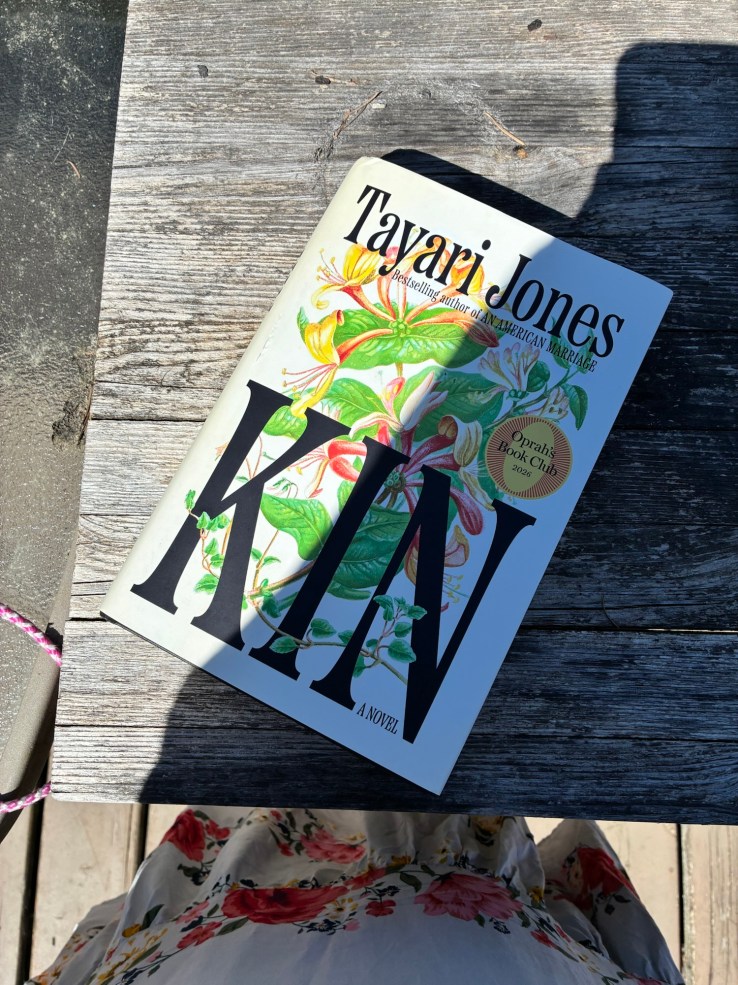
Annie and Vernice (or Niecey as she’s known by those close to her) are “cradle friends”. Two babies without mothers who are placed in the same cradle, both growing up in the Black community of Honeysuckle, Louisiana. Vernice is an orphan, taken in by her aunt, after her father murdered her mother and then killed himself. Annie is raised by her grandmother after her mother left her as a baby. Both girls are cared for physically more than emotionally and so lean on one another. No one knows them better than the other. Both feel the lack of a mother and this manifests in their lives in different ways.
At 17, both Annie and Vernice are looking for ways out of Honeysuckle. Annie takes off to Memphis, following a potential lead on where her mother might have gone, while Vernice enrols at Spelman College in Atlanta. The story alternates chapters between the two main characters, including some letters back and forth, while they don’t see each other in person for another three years. We watch them take very different paths, struggling to find their places as Black women in a largely unforgiving environment.
This is still the Jim Crow South and although Rosa Parks has sat on the bus and Dr. King is beginning to be active, segregation is a major part of these women’s lives. Jones does an excellent job at these depictions of large and small racial aggressions. In a scene that stuck with me, one of the characters waits in the “Coloured” waiting area at a bus station. Another woman waits with her little girl, both dressed nicely, waiting on their husband and father. The bus is hours late and there is no washroom to use in their area and so the little girl, in all her nice clothes, is forced to urinate outside. Throughout, also, there are frequent reminders that slavery and sharecropping are not far away in the past. These are memories of recent family members and their painful repercussions are still being dealt with.
While Annie becomes increasingly obsessed with finding her mother and with what it means to have been abandoned so early in life, Vernice seeks to elevate her position through connections and education. But she is quickly forced to choose between two loves, and thus, two different lives. Though at times they are angry at each other, or hurt by one another, always Annie and Vernice come back to each other. At one point, Vernice has to decide whether to reveal something secret to Annie and she does so because the pain of not being known by at least one person in the world is too much.
Overall, I really appreciated this novel. It did leave me with the sense that I actually wanted to spend a longer timeline with these characters. Most of the book takes place over about 3 to 5 years, from their late teens to their early twenties. I would have liked to see more of their adulthood, more of who these characters actually become as women. It felt like their lives were just beginning. But maybe that’s the point.

 Karissa Reads Books